
Dry Fog Systems that effectively reduce dust at the source.
Reduce dust challenges in demanding industrial environments with energy-efficient solutions that improve working conditions, reduce maintenance requirements, and increase operational reliability.
Dry Fog Systems (Dust Suppression Systems).
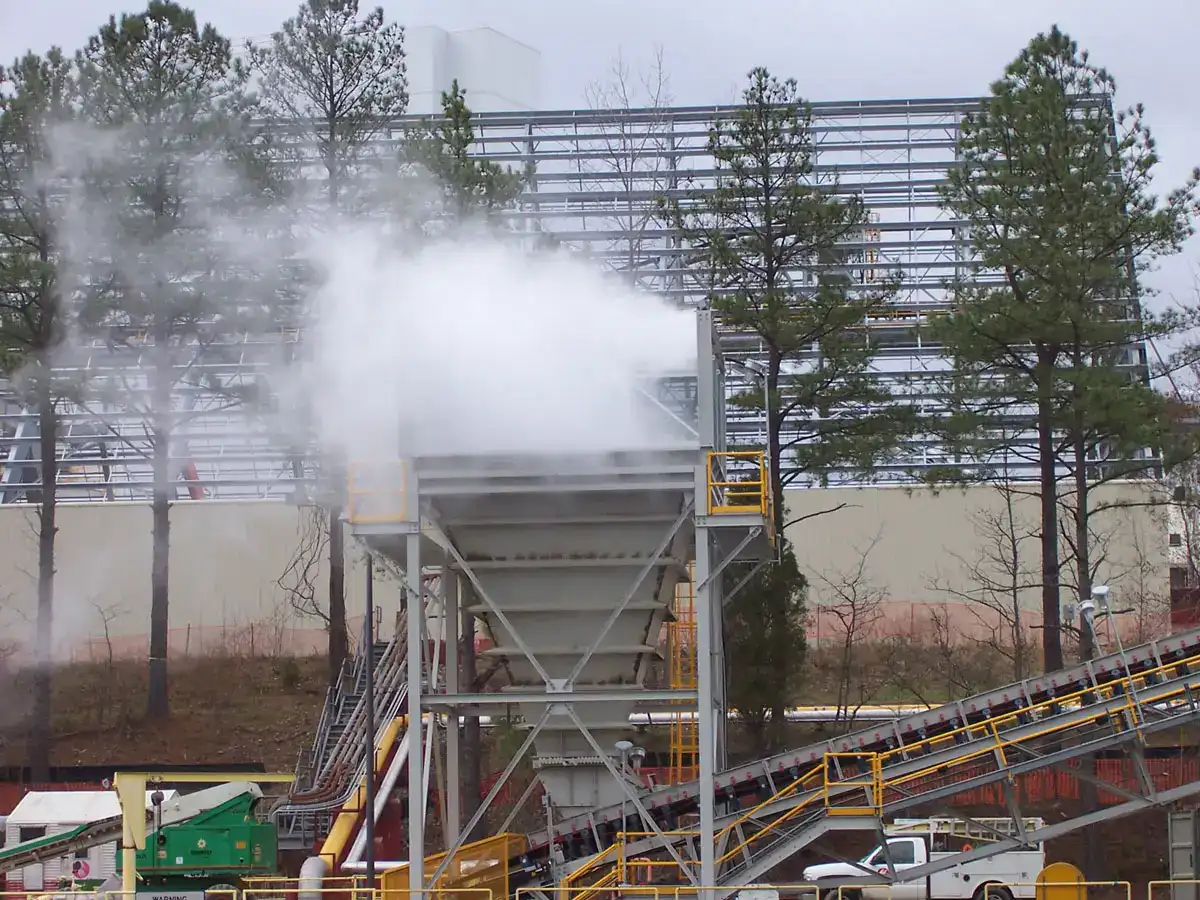
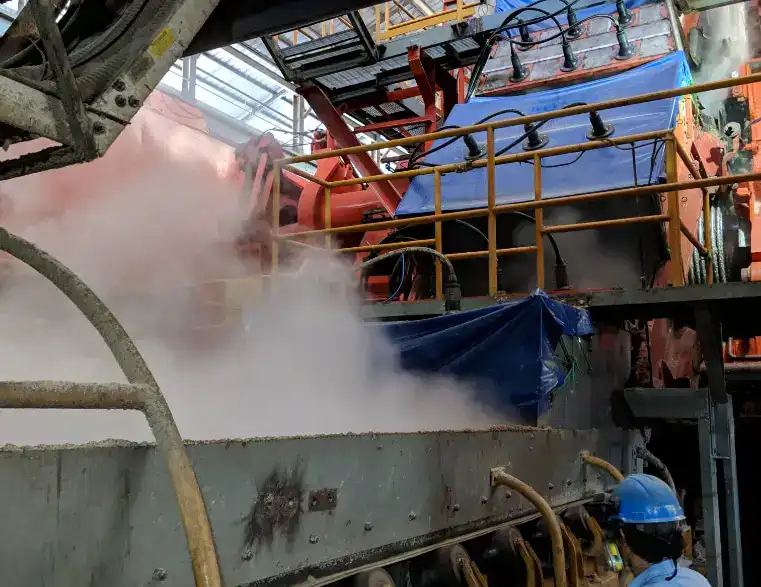
Our Dry Fog Systems provide effective control of fugitive dust in industrial processes and contribute to a cleaner, safer, and more efficient working environment. By capturing dust particles directly at the source, dust emissions are reduced without the need for large amounts of water or chemical additives. The systems are customized for each individual installation and provide a reliable solution with low maintenance and operating costs.
How do Dry Fog Systems work?
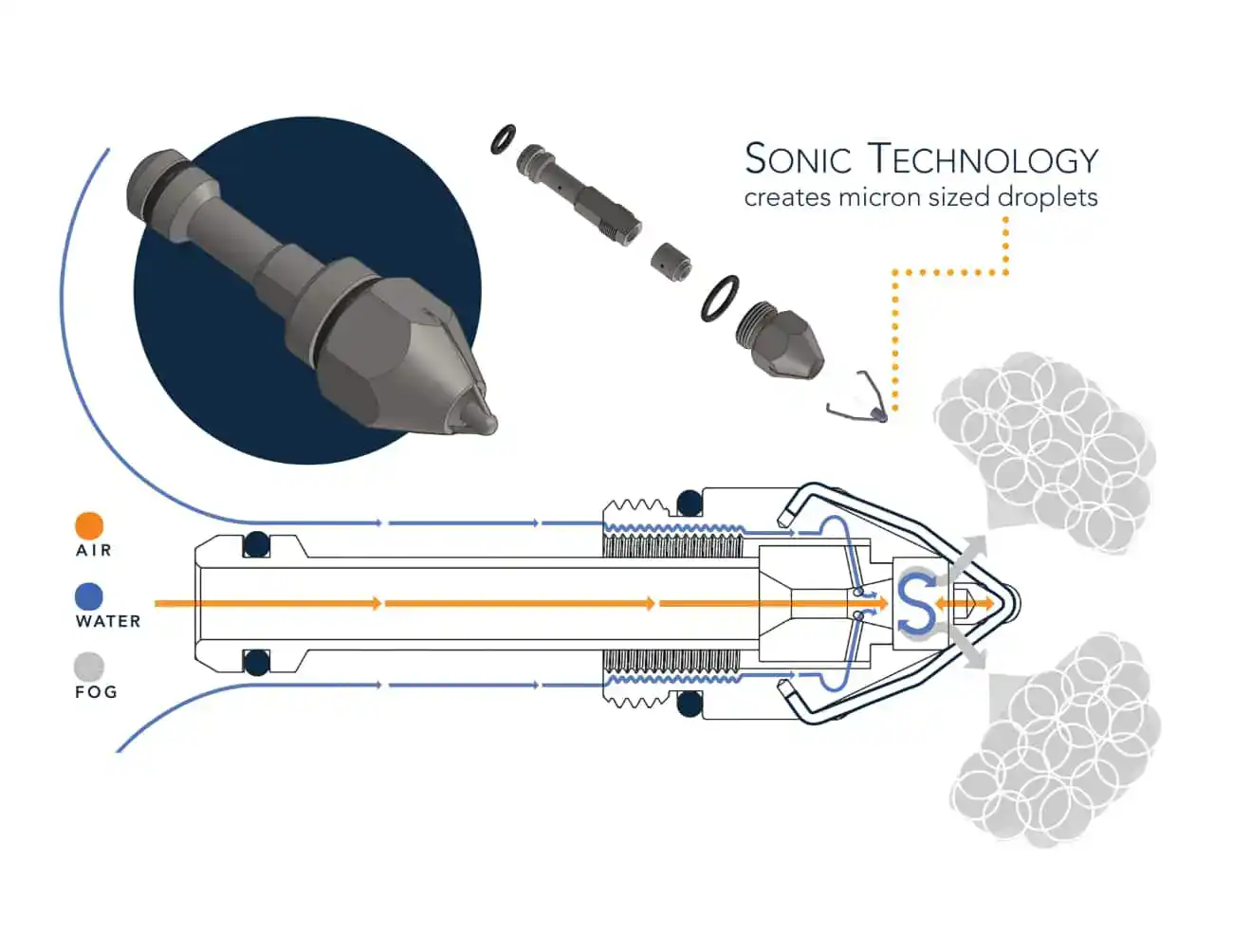
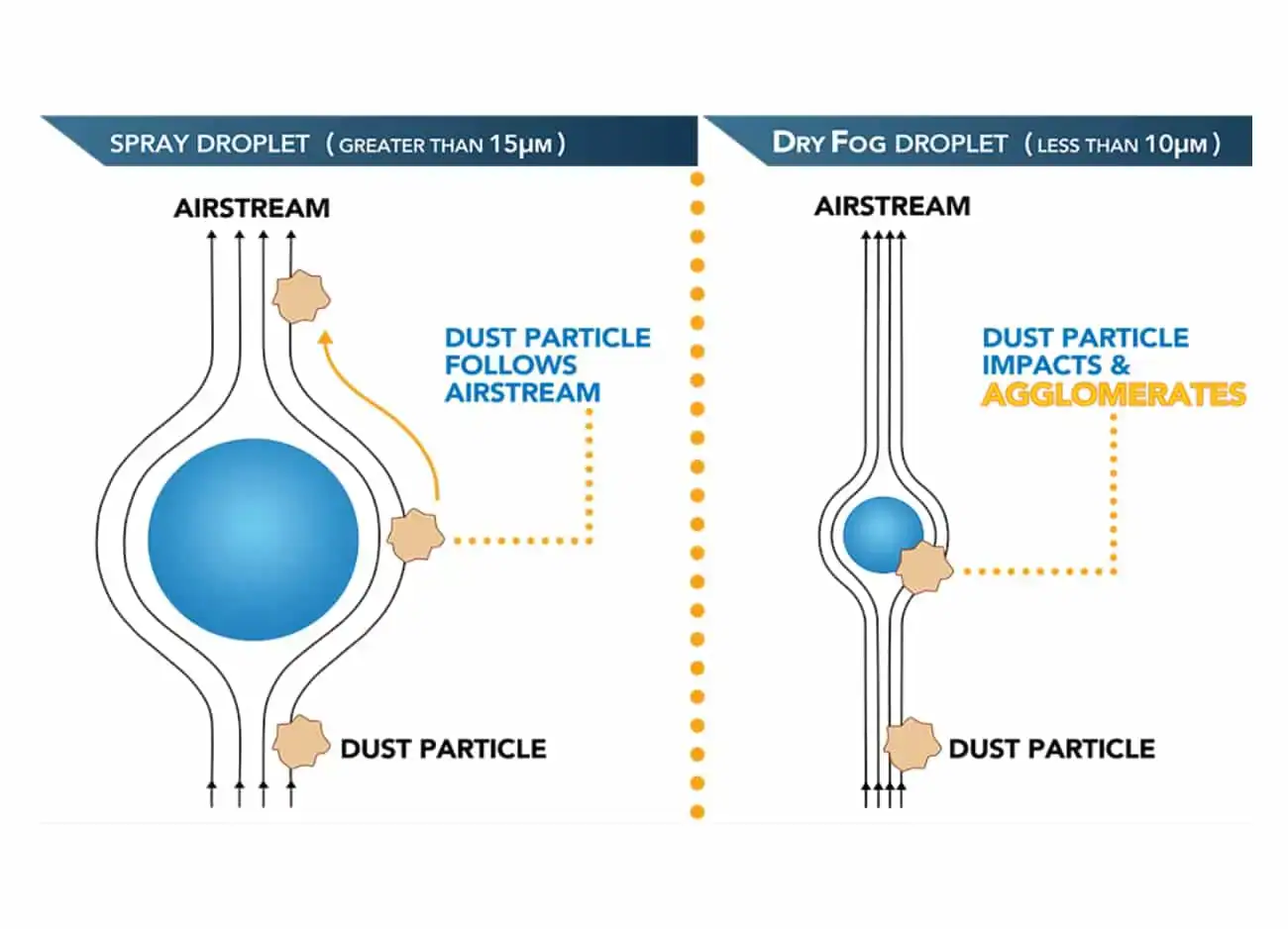
Dry Fog Systems use air-atomizing nozzles to produce ultra-fine water droplets measuring 10 microns or less. These small water droplets attach to dust particles of similar size, creating larger particles that fall back into the process instead of remaining airborne.
The technology is based on the principle of agglomeration, where water droplets and dust particles combine to form larger particles. These heavier particles are no longer suspended in the air and are returned to the material stream by gravity. For optimal performance, the water droplets and dust particles must be similar in size, and treatment should take place as close to the dust source as possible.
Customized solutions for different requirements.
Every industrial environment has different requirements for dust control. Our Dry Fog Systems are engineered based on material type, process conditions, dust source, and local operating environments.
The systems are delivered as flexible, modular solutions and can include complete control systems, filtration, air and water regulation, supply lines, nozzle mounting systems, and other required components. If required, solutions can also be supplied with air compressors, air receiver stations, pumps, and self-cleaning secondary filtration systems.
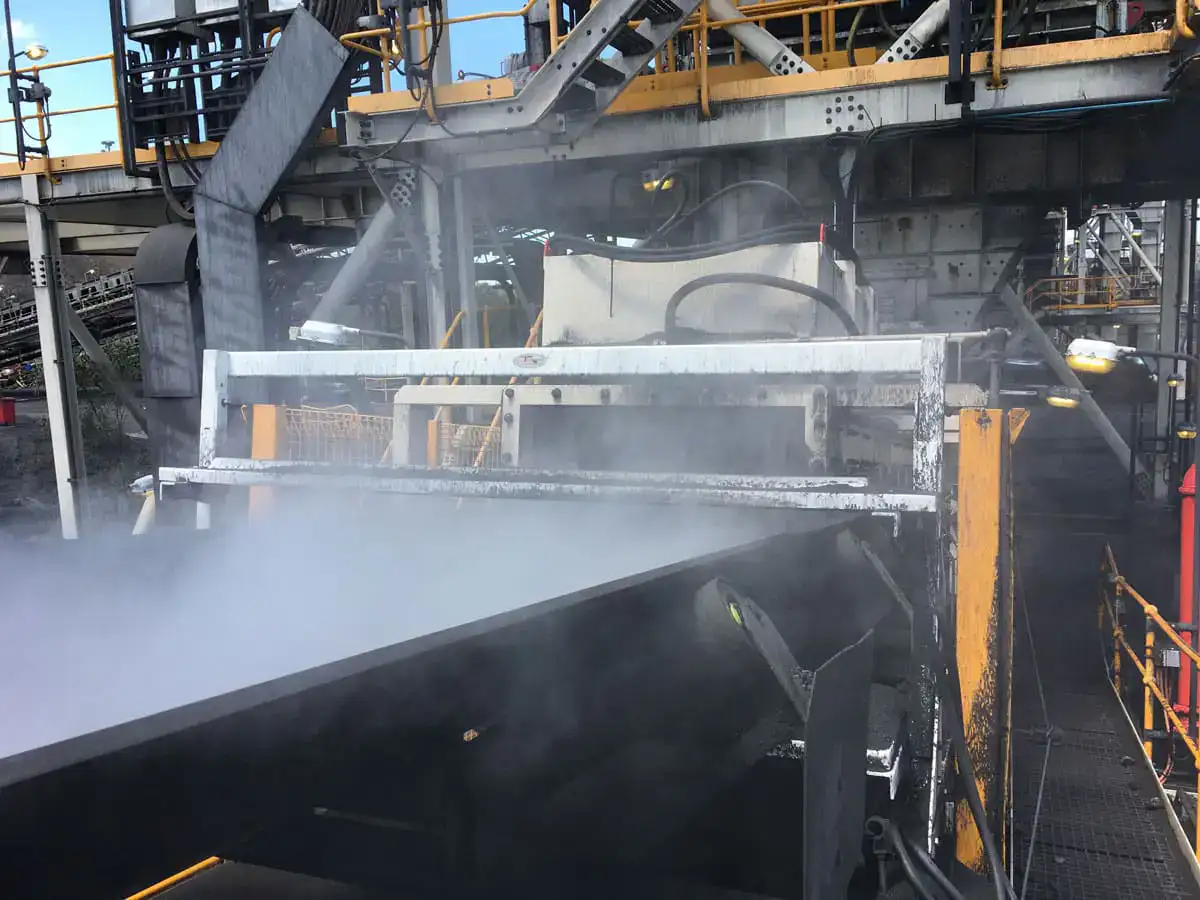
Applications.
The systems can be adapted for demanding environments, including hazardous areas, and can be supplied with freeze protection for operation in temperatures as low as -60 °C.
Advantages of Dry Fog Systems.
Dry Fog Systems provide effective dust control with significantly lower water consumption compared to traditional solutions. The minimal moisture addition reduces the risk of problems associated with wet material, corrosion, and additional maintenance requirements.
Benefits include:
- Effective reduction of fugitive dust
- Low water consumption
- Reduced maintenance requirements
- Flexible installation
- Improved working environment and safety
- Reduced operating costs
Comparison with other dust suppression methods.
Dry Fog Systems compared with Water Cannons
Water cannons use large volumes of water to suppress dust, while Dry Fog Systems use extremely fine water droplets that are better suited for capturing small dust particles.
The high water consumption associated with water cannons can lead to challenges such as wetting of materials, reduced fuel value in certain products, unstable loads for shipping, and slip hazards in working areas. Water cannons are also unable to achieve the same level of dust suppression for fine and respirable dust particles due to larger droplet size. Dry Fog Systems provide effective dust control while minimizing these disadvantages.
Dry Fog Systems compared with Dust Collection Systems
Traditional dust collection systems, often referred to as baghouses, remove airborne particles during industrial processes. These systems typically require significant investment in infrastructure, ductwork, filtration equipment, fans, and ongoing maintenance to keep mechanical components operating efficiently.
Dry Fog Systems control dust directly at the source and can often achieve comparable dust reduction with a simpler installation, lower energy consumption, and reduced operating costs.
Dry Fog Systems compared with Chemical Dust Suppression Systems
Chemical dust suppression systems use chemical surfactants or additives to bind dust particles together or improve the ability of water to penetrate conveyed materials.
After installation, chemical systems require ongoing expenses related to chemicals, storage, handling, and safety documentation. Similar to other spray-based solutions, chemical systems can also wet the material and equipment, potentially increasing maintenance requirements.Dry Fog Systems use only water and compressed air, providing a more environmentally friendly solution without the need for chemical additives.
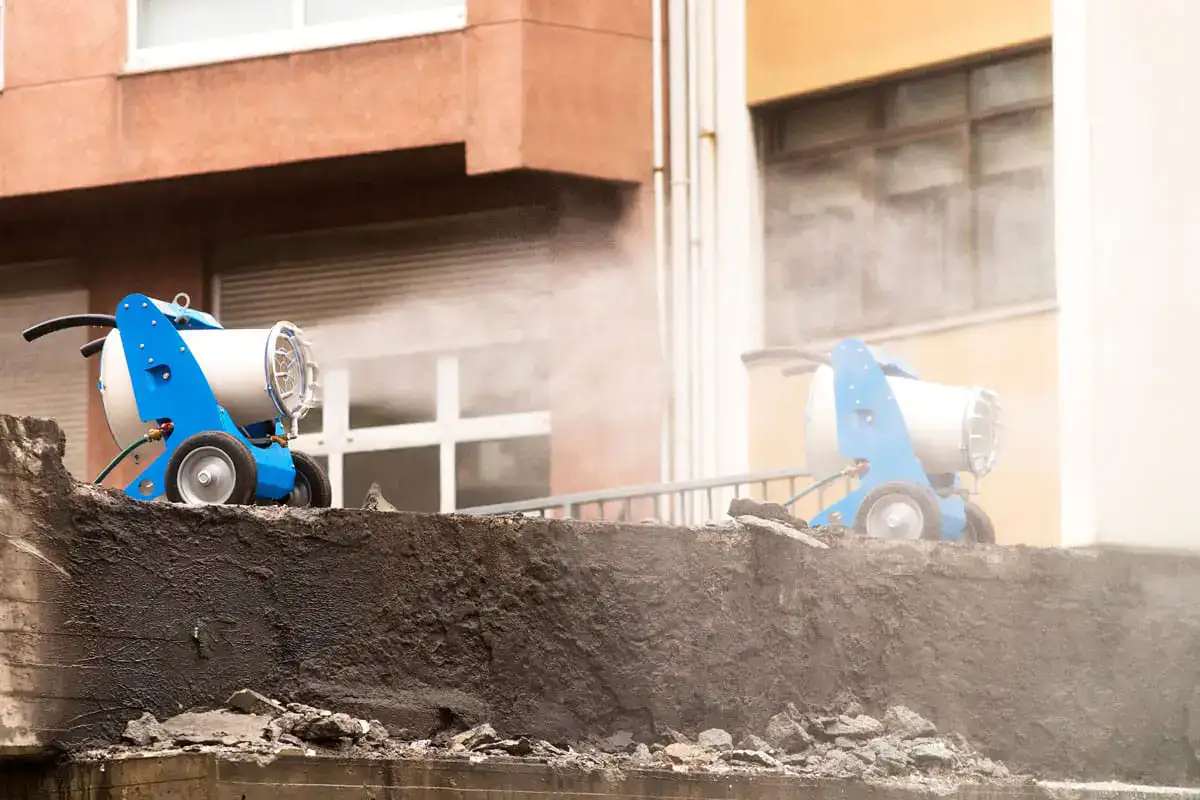
Effective dust control for demanding industrial processes
A safe and economical solution that reduces fugitive dust, improves working conditions, and minimizes maintenance requirements.
Customers who appreciate our services.